
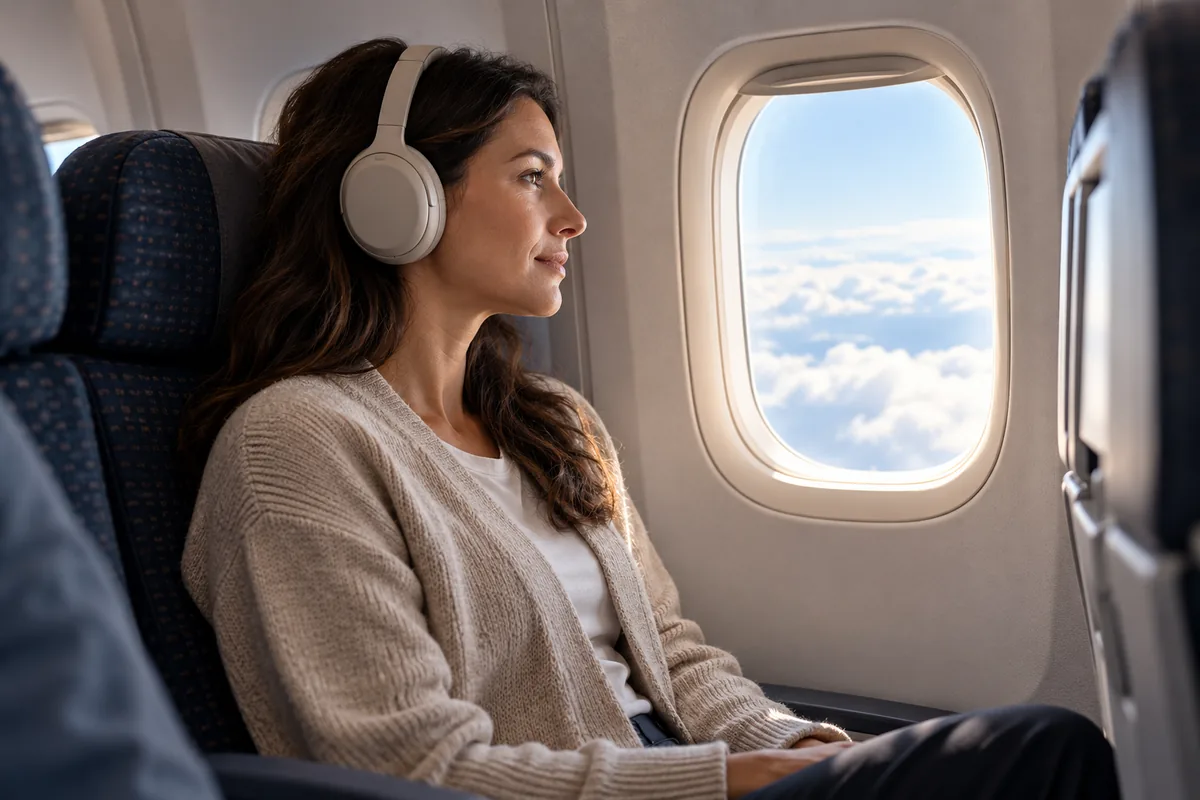
A long flight feels a little longer when your sweater is in the overhead locker, your phone is nearly flat and the person beside you has just fallen asleep. None of those things is much of a problem on its own. Together, they can make a few hours in economy feel like a very long afternoon.
Making the journey more comfortable starts well before that moment. The flight times you choose, the seat you settle into and the few things you keep close can all make a difference. It also helps to think beyond the aircraft door. How much energy will you need when you land, and where will you go if your hotel room is still several hours away?
A flight that fits the way you travel
When you're looking at flights, it's worth thinking about your usual day. If you can settle to sleep after dinner, an evening departure might appeal. If you rarely sleep sitting up, an overnight flight followed by a busy morning of sightseeing could be a harder start than you want. Arriving early gives you more hours at your destination, but it doesn't necessarily give you more energy to enjoy them.
Two flights sitting next to each other in a search result can look much the same until you follow the journey through. One might mean leaving home before dawn. Another might involve a longer connection, an airport change or an arrival so late that all you want is your bed. Departure and arrival times, total travel time, stops and the journeys to and from the airport belong in the same comparison as the fare.
A stopover you've chosen as part of the trip can be something to look forward to. A gap of two or three hours may simply leave you eating at the airport and waiting for the next boarding call. Meals, shopping or somewhere more comfortable to wait can eat into the saving on a cheaper ticket.
A longer break might tempt you to explore. Before imagining an afternoon in the city, though, you'll need to allow for entry requirements, the journey into town and enough time to return and clear the necessary airport checks.
Suppose your final two choices cost the same after bags and seat selection. One lands at 7 a.m., the other at 2 p.m. The early arrival could be lovely if you've arranged bag storage and fancy breakfast and a wander. It may feel less appealing if you need a shower and a rest, and your hotel cannot promise a room until the afternoon. Thinking through that first morning often makes the choice clearer.
Before settling on a flight, there are a couple of details behind the fare that deserve a look. Bags, seat selection and onboard services can differ between tickets. The airline selling the journey may also be different from the one operating it, so the useful cabin information comes from the carrier flying each segment. The U.S. Department of Transportation covers both points in its ticket buying guidance, linked below.
The seat you'll spend those hours in
A window seat can seem like the obvious choice when you're imagining the view after takeoff. Several hours later, the ability to get up without disturbing anyone might matter more. If you like to move in and out of your seat, an aisle may suit you. If you'd rather settle in with a wall to lean against and don't mind asking someone to move when you need to get out, the window may be worth choosing.
That is also a useful way to decide whether to pay for a seat: what would it change about your own journey? There isn't one row that works best for everyone. A seat near the galley or lavatory can bring more passing traffic; bulkheads and bassinet positions may have different storage or armrest arrangements. The airline's seat map is a starting point for understanding those details, rather than a promise of peace and quiet.
The aircraft type shown at booking can change, too. Looking at the operating airline's current seat map, amenities and flight details again closer to departure helps you prepare for the cabin you're likely to find.
A few familiar comforts within reach
Once you've boarded, the most useful bag is often the small one you can reach without turning the overhead locker into a packing exercise. Your headphones, a light layer, an eye mask or earplugs, and something you enjoy reading can make settling in much easier. There is no need to buy every travel accessory you've seen online. A comfort item you already like using is a better starting point than an unfamiliar gadget taking up room at your feet.
Your passport, wallet, phone and arrival details belong somewhere easy to keep track of as well. With a charging cable and an allowed portable charger in the same small kit, you won't need to hunt through a larger bag each time you want something. Keeping it compact leaves more of the under seat space for your legs. The crew's storage instructions still apply, and some seats require bags overhead for takeoff and landing.
There is one packing detail worth getting right before reaching the gate. The FAA says power banks and spare lithium batteries must travel in accessible carry on baggage, not checked baggage. If your cabin bag is taken for checking at the gate or beside the aircraft, those items need to come out and stay with you in the cabin. It's a good moment to keep your documents and other flight essentials with you as well.
The operating airline may have more specific battery rules, including where a charger can be stored and whether it can be used during the flight. Permission to carry one doesn't automatically mean permission to use it whenever you like. Its current policy and the crew's instructions are the ones to follow.
Something to enjoy when sleep doesn't happen
It is tempting to plan on sleeping through most of a long flight. Sometimes that works; sometimes you finish dinner, close your eyes and find yourself wide awake. Having a film you've been meaning to watch, an audiobook or a few downloaded podcasts gives you something to look forward to if sleep doesn't arrive.
Seatback screens, Wi Fi and charging outlets vary between aircraft, and an individual screen or socket can be out of service. A fully charged device with something saved offline takes a little pressure off all three. Opening the download once at home is a useful last check, while there is still time to sort out a missing episode or a file that hasn't finished saving.
The cable matters as much as the device. A USB port may not fit yours or supply enough power, and your headphones may need a different connection for the seatback system. If that sounds like more equipment than you want to carry, your own downloaded entertainment is a simpler fallback. A book, notebook or puzzle can be welcome when you've had enough screen time.
You don't have to turn the hours into a productivity challenge. Something familiar and enjoyable can be quite enough. And if you know sleep is uncertain, leaving the first part of your arrival day flexible is kinder than relying on a travel pillow to deliver a full night's rest.
Sharing the cabin makes a difference
Those first few minutes on board are easier when the things you'll use are already together. You can put them in the permitted storage space, stow the larger bag and let the people behind you reach their rows. Later, a quick look behind before reclining, followed by a gentle adjustment, gives your neighbor a chance to move a drink or laptop.
Headphones, belongings kept within your own space and a little room for the crew during service all help in a cabin where everyone is trying to get comfortable. If something isn't working with your seat or you need help with a bag, the crew are the people to ask. Their instructions take priority, including when to return your seat to the required position.
Even after you've settled in, the safety briefing and card deserve your attention. The FAA also advises keeping your seat belt fastened while seated. It's a small part of getting comfortable that is easy to keep in place.
A gentler first hour after landing
By the time you land, you may have very little enthusiasm for working out an unfamiliar address or searching through email for a transfer plan. Having your hotel address saved, along with the local arrival date and time, makes that first stretch easier. If you're connecting onward, the terminal and transfer steps are just as useful to have to hand.
An early arrival can still be a lovely start to a trip. It helps to know where the bags will go, whether a room will actually be available and how much you feel like doing before then. Our guide to arriving before hotel check in follows that part of the day in more detail.
As you compare flights on Travorro, give that arrival the same thought as the hours in the air. A manageable connection, a seat that suits you and a morning you can enjoy may be worth more to your trip than a slightly lower headline fare.
A short list for the night before
With the journey planned, there should be very little left to organize. This is the small collection of things worth having ready:
- Travel documents, your hotel address and the plan for getting there.
- A charged phone or tablet, its cable and any portable charger allowed by your airline.
- Headphones and something downloaded that you'll actually enjoy.
- A light layer and the small comfort items you already know work for you.
- An accessible place for power banks and spare lithium batteries, especially if your cabin bag is checked at the gate.